Semiconductors, Sovereignty, and Supply Chains: Why Taiwan's Technology Role Should Reshape How US Enterprises Source Hardware
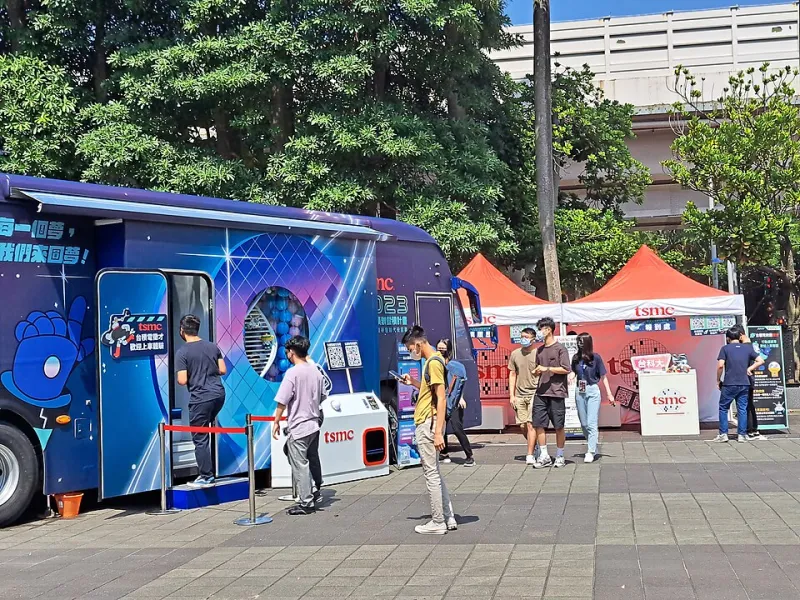
Photo: Taiming2003, CC BY-SA 4.0, via Wikimedia Commons
When an American enterprise purchases a server, deploys a network switch, or procures a fleet of laptops, the decision-making process typically centers on performance benchmarks, vendor support agreements, and total cost of ownership. What rarely appears on the evaluation scorecard is a question that has become increasingly urgent in boardrooms and government offices alike: where, precisely, were the components inside that hardware manufactured—and what happens to the supply chain if geopolitical conditions deteriorate?
The answer, for a remarkable proportion of the world's advanced technology hardware, points to a single island of 23 million people located 100 miles off the southeastern coast of China. Taiwan's dominance in semiconductor fabrication is not a recent development, but its strategic significance has never been more acutely felt.
The Scale of Taiwan's Manufacturing Role
Taiwan Semiconductor Manufacturing Company—better known as TSMC—produces an estimated 90 percent of the world's most advanced chips, defined as those manufactured at process nodes below 10 nanometers. These are the processors, graphics units, and application-specific integrated circuits that power everything from enterprise servers and network infrastructure to the AI accelerators that are rapidly becoming central to US business operations.
Beyond TSMC, Taiwan hosts a dense ecosystem of specialized component manufacturers, substrate producers, packaging facilities, and engineering talent that collectively constitute what analysts frequently describe as an irreplaceable concentration of semiconductor expertise. MediaTek, ASE Technology, and United Microelectronics Corporation represent just a fraction of the broader industrial cluster that has developed over four decades of deliberate investment and knowledge accumulation.
For US enterprises, this concentration means that the hardware underpinning their IT infrastructure—regardless of which American or European brand name appears on the chassis—almost certainly contains components that passed through Taiwan at some point in the production process.
Why Geopolitical Risk Is Now an Enterprise IT Concern
The question of Taiwan's political status relative to the People's Republic of China is one of the most consequential unresolved geopolitical issues of the current era. Without taking a position on the merits of any particular outcome, it is factually accurate to state that scenarios involving military conflict, economic sanctions, or significant disruption to cross-strait trade would have an immediate and severe impact on global technology supply chains.
The US government has acknowledged this dependency explicitly. The CHIPS and Science Act of 2022, which allocated more than $52 billion toward domestic semiconductor manufacturing and research, was motivated in substantial part by a recognition that American economic and national security interests were uncomfortably exposed to a single geographic concentration of production capacity.
For enterprise CIOs and procurement officers, this is not an abstraction. The chip shortage that followed the COVID-19 pandemic—exacerbated by the geographic concentration of fabrication capacity—resulted in extended lead times for servers, networking equipment, and workstations that disrupted IT refresh cycles across industries. That episode offered a preview of what supply disruption at greater scale could look like.
The Vendor Relationship Reckoning
US enterprises have historically evaluated hardware vendors primarily on the basis of product capability, pricing, and service quality. The geopolitical and supply chain dimensions of vendor selection received comparatively little attention during the extended period of globalized trade stability that characterized the post-Cold War era. That period is now clearly over.
A more rigorous vendor evaluation framework—one appropriate to the current environment—would include several dimensions that have traditionally been treated as peripheral. Organizations should seek transparency from hardware vendors regarding the geographic distribution of their component sourcing, the depth of their inventory buffers, and the contingency arrangements they have in place for supply disruption scenarios.
Vendors who have invested in supply chain diversification—maintaining relationships with foundries in South Korea, Japan, or the emerging US domestic fabrication ecosystem—offer a meaningfully different risk profile than those whose production dependencies are heavily concentrated in a single region. This distinction is worth quantifying and incorporating into procurement decisions.
Diversification Is Not Decoupling
It is important to draw a clear distinction between supply chain diversification and the more radical notion of complete decoupling from Taiwan-origin components. The latter is, for practical purposes, not achievable in the near term. The manufacturing expertise, specialized equipment, and process knowledge concentrated in Taiwan cannot be replicated quickly, regardless of the capital invested in alternative facilities.
The TSMC fabrication plants currently under construction in Arizona, while significant, will initially produce chips at nodes that lag the leading edge of what Taiwan-based facilities can manufacture. Intel's domestic foundry ambitions face their own timeline and technical challenges. The honest assessment is that Taiwan will remain the world's most capable producer of advanced semiconductors for the foreseeable future.
What diversification does offer is resilience at the margins—a reduction in the severity of disruption rather than its elimination. Enterprises that establish relationships with multiple hardware vendors, maintain higher inventory levels of critical components, and identify qualified secondary suppliers for key equipment categories will be better positioned to sustain operations through a supply disruption than those operating on lean, single-source procurement models.
Rethinking the Hardware Refresh Cycle
One practical implication of elevated supply chain risk is a reconsideration of the traditional hardware refresh cycle. The just-in-time procurement model that became standard during the era of reliable global trade assumes that components and finished goods will be available on short notice at predictable prices. That assumption deserves scrutiny.
Enterprises managing significant on-premises infrastructure should evaluate whether extending refresh cycles—combined with strategic stockpiling of high-criticality components such as network switches, storage controllers, and server processors—provides a meaningful resilience benefit relative to its carrying cost. For organizations in regulated industries or those operating critical infrastructure, this calculus may favor a more conservative inventory posture than current practice reflects.
The Broader Strategic Implication
Taiwan's centrality to global technology manufacturing is a fact of the current industrial order—one that US enterprises cannot wish away but can meaningfully account for in their planning. The organizations that engage seriously with supply chain risk as a strategic variable, rather than treating it as a procurement afterthought, will be better prepared for the disruptions that the current geopolitical environment makes increasingly plausible.
At EMIS TechWire, our perspective is that the technology decisions enterprises make in the near term—vendor selection, inventory strategy, infrastructure architecture—will have consequences that extend well beyond the next budget cycle. The semiconductor supply chain is not merely a logistics concern. It is, increasingly, a dimension of enterprise security in the broadest sense of that term: the capacity of an organization to operate reliably in an uncertain world.
That is a conversation US enterprise leaders can no longer afford to defer.
